Domain gbnr.de kaufen?
Wir ziehen mit dem Projekt
gbnr.de um.
Sind Sie am Kauf der Domain
gbnr.de interessiert?
domain@kv-gmbh.de · 0541-91531010
Domain gbnr.de kaufen?
Was war die Ideologie des Peoples Temple?
Der Peoples Temple war eine religiöse Bewegung, die von Jim Jones gegründet wurde. Die Ideologie des Peoples Temple war eine Mischung aus sozialistischen, kommunistischen und christlichen Ideen. Sie betonten soziale Gerechtigkeit, Rassengleichheit und Gemeinschaftsleben. **
Wie kann man dem Peoples Temple beitreten?
Der Peoples Temple war eine religiöse Bewegung, die in den 1970er Jahren in den USA aktiv war. Es ist wichtig zu beachten, dass der Peoples Temple tragischerweise für den Massensuizid in Jonestown, Guyana, verantwortlich ist. Es wird dringend davon abgeraten, dem Peoples Temple beizutreten oder sich mit ähnlichen gefährlichen Kulten zu involvieren. Stattdessen ist es ratsam, sich auf positive und gesunde Gemeinschaften zu konzentrieren. **


Ähnliche Suchbegriffe für Dilated-Peoples---The
Top-Angebote
Produkte zum Begriff Dilated-Peoples---The:
-
Floslek Arnica gel for the treatment of dilated blood vessels, bruises and swelling 200 ml (200 ml, Gesichtsgel) (5905043003795)Floslek Arnica gel for the treatment of dilated blood vessels, bruises and swelling 200 ml (200 ml, Gesichtsgel) (5905043003795)10,01 €*Versand: 3,00 €Sichere Weiterleitung zum Anbieter
-
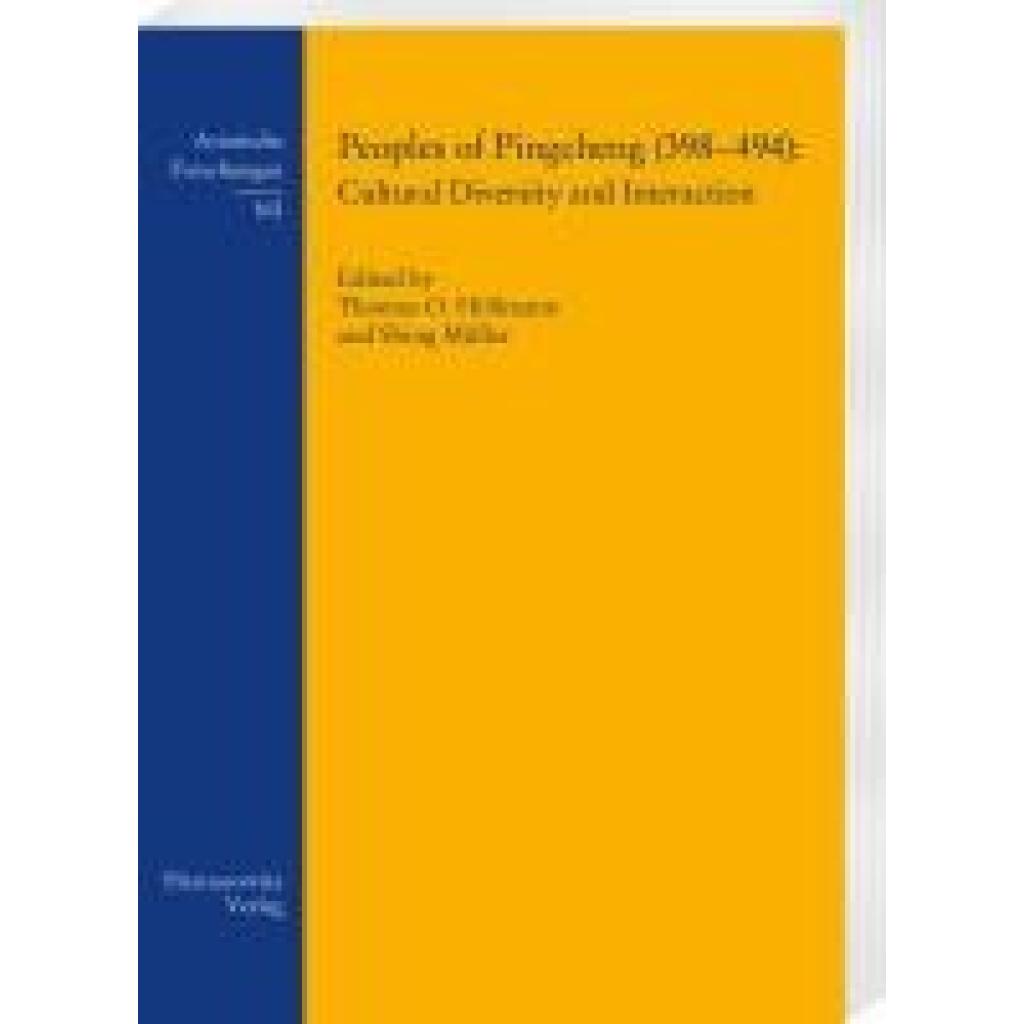
Peoples of Pingcheng (398-494):Peoples of Pingcheng (398-494): , Compared to the later capital of the Northern Wei Dynasty, Luoyang (494-534), Pingcheng on the northern border of the Chinese world has received less scholarly attention despite its far longer capital status (398-494). The main reason is the lack of written sources. In addition, there is the derogatory idea that Pingcheng was a latifundium inhabited by "barbarians," since the rulers of the Northern Wei were the Tuoba Xianbei from the eastern steppe, who established the first long-term foreign control over northern China. Traditionally, Luoyang is the epitome of the sinicized Tuoba Xianbei, while Pingcheng represents the state of the Tuoba Xianbei who were on the way to "becoming Chinese." Excavations show that Pingcheng, which was built on the ruins of a garrison from the Han-Dynasty, arose from nothing and the inhabitants came from outside. Burial finds indicate a steadily growing population, which is said to have reached one million in its prime. At first, tombs were erected to indicate their steppe origins. New rites and artifacts emerged in spurts. This corresponds to written records, according to which the city was mainly populated by steppe warriors, followed by forcibly relocated peoples from all conquered northern Chinese regions. The authors focus on the people(s) in Pingcheng. Zhang's epigraphic study is devoted to a Xianbei family that arose during the Pingcheng period and remained closely intertwined with the imperial court in the following centuries. Using burial finds, Müller explores the diversity and foreignness of funerary customs and artifacts, the ways in which different ethnic groups communicated and interacted, and the emergence of a new collective identity that was anything but Chinese. , Sonstige > Kraftstoffversorgung , Erscheinungsjahr: 20241225, Titel der Reihe: Asiatische Forschungen#162#, Redaktion: Höllmann, Thomas O.~Müller, Shing, Seitenzahl/Blattzahl: 184, Abbildungen: 147 illustrations, 15 tables, 3 diagrams, 2 maps, Keyword: Culture; Diversity; Pingcheng, Fachschema: China / Geschichte (bis 1945)~Geschichte / Theorie, Philosophie~Asien / Geschichte, Fachkategorie: Gesellschaft und Sozialwissenschaften~Geschichte: Theorie und Methoden~Asiatische Geschichte, Warengruppe: TB/Geschichte/Sonstiges, UNSPSC: 49019900, Warenverzeichnis für die Außenhandelsstatistik: 49019900, Länge: 240, Breite: 170, Höhe: 12, Gewicht: 480, Produktform: Kartoniert, Genre: Geisteswissenschaften/Kunst/Musik,37,11 €*Versand: 0,00 €Sichere Weiterleitung zum Anbieter
-
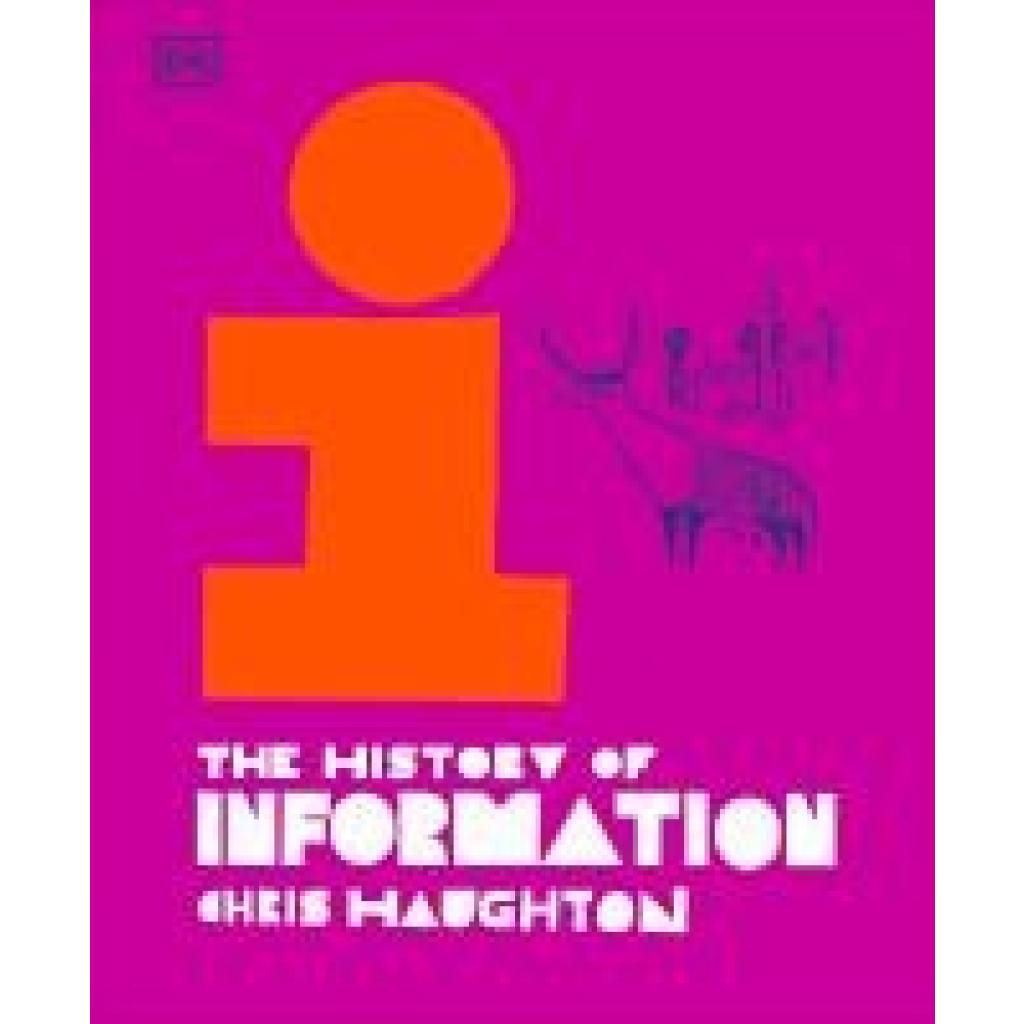
Haughton, Chris: The History of InformationThe History of Information , A journey through the evolution of knowledge, communication, and information. The debut non-fiction book by best-selling author Chris Haughton. History, as it is often taught, is a list of kings and queens and treaties and events. It presents the what and when, but it rarely asks why. Why is it that we had kings and queens at all? Why then all of a sudden did we abandon them and shift to democracies? Why did the world's religions rise around the same time? Why is society dominated by men? The answers all come down to the same thing: information. The striving to share information, and - at the same time - the striving to undermine it, explains so much of today's world and connects so many seemingly unconnected things: the rise of religions, states, science, democracy, the west, militarism, racism, fascism, consumerism, big tech, polarisation, and AI. This history of information is closely connected to the history of visual communication - and as these two are largely the same - it makes sense to tell this story visually: a history of graphics told through graphics. The History of Information , through a mix of timelines, graphics, and illustrations, clearly breaks down and explains each concept for children and adults alike. The History of Information includes: A beautiful look at the story of information; from the first languages and cave paintings, through to how we communicate and record information today. Content written and illustrated by world famous and multi-award winning author and illustrator, Chris Haughton. A global journey throughout history from the origination of language, how information has been passed on and recorded, and how this affected humanity. , > , Erscheinungsjahr: 20240905, Produktform: Leinen, Autoren: Haughton, Chris, Seitenzahl/Blattzahl: 144, Themenüberschrift: JUVENILE NONFICTION / Technology / How Things Work-Are Made, Keyword: fact books for kids age 10-12; fact book for kids; fact books for kids age 8-10; kids fact books age 9 12; kids fact books; non fiction books for teenagers; non fiction books; general knowledge books; books for kids 9-12; encyclopedia for children; children's encyclopedia; curious minds book for kids; britannica children's encyclopedia; science encyclopedia for kids; children's encyclopedia age 10; non fiction books for kids 9-12; non fiction books for 7 year olds; children's encyclopedia age 7-9; children's history books; kids history books age 7; kids encyclopedia; science books for kids, Fachschema: EDV / Kindersachbuch, Jugendsachbuch~Englische Bücher / Kinderliteratur, Jugendliteratur / Sachbuch~Geschichte / Kindersachbuch, Jugendsachbuch~Technik / Kindersachbuch, Fachkategorie: Kinder/Jugendliche: Sachbuch: Geschichte, Altersempfehlung / Lesealter: 18, ab Alter: 9, bis Alter: 12, Imprint-Titels: DK Children, Warengruppe: HC/Kinderbücher/Sachbücher/Naturwissensch./Technik, UNSPSC: 49019900, Warenverzeichnis für die Außenhandelsstatistik: 49019900, Länge: 286, Breite: 236, Höhe: 22, Gewicht: 1008, Produktform: Gebunden, Genre: Importe,21,97 €*Versand: 0,00 €Sichere Weiterleitung zum Anbieter


-
Was bedeutet das Symbol des Peoples Temple?
Das Symbol des Peoples Temple ist ein rotes, schwarzes und weißes Banner mit einem goldenen Sonnenkreis in der Mitte. Die Farben repräsentieren Solidarität, Stärke und Reinheit, während der Sonnenkreis für Einheit und spirituelle Erleuchtung steht. Das Symbol wurde von Jim Jones, dem Anführer des Peoples Temple, entworfen und sollte die Ideale der Gemeinschaft verkörpern. **
-
Was sind die traditionellen Bräuche und Lebensweisen der Indigenous Peoples?
Die traditionellen Bräuche und Lebensweisen der Indigenous Peoples umfassen oft enge Verbindungen zur Natur, spirituelle Rituale und Gemeinschaftsaktivitäten. Sie betonen die Wichtigkeit der Wahrung der Umwelt und des Gleichgewichts zwischen Mensch und Natur. Viele Indigenous Peoples praktizieren auch traditionelle Handwerkskunst, Musik und Tanz als Ausdruck ihrer kulturellen Identität. **
-
Wie sieht das Leben in der Sekte Peoples Temple aus und welche Glaubensauffassung hat die Sekte?
Das Leben in der Sekte Peoples Temple war geprägt von einer starken Kontrolle und Abhängigkeit von ihrem Anführer Jim Jones. Die Mitglieder lebten gemeinschaftlich und hatten wenig Privatsphäre. Die Glaubensauffassung der Sekte kombinierte Elemente des Christentums mit sozialistischen Idealen und betonte soziale Gerechtigkeit und Gleichheit. **
-
Welche Artikel werden anstelle von "the" verwendet?
Anstelle von "the" können verschiedene Artikel verwendet werden, je nachdem, ob es sich um einen bestimmten oder unbestimmten Artikel handelt. Der bestimmte Artikel "the" wird verwendet, wenn wir über etwas Bestimmtes sprechen, das bereits bekannt ist oder zuvor erwähnt wurde. Die unbestimmten Artikel "a" und "an" werden verwendet, wenn wir über etwas Unbestimmtes oder Allgemeines sprechen. **


Wann benutzt man den Artikel THE im Englischen?
Im Englischen benutzt man den Artikel "the" vor Substantiven, die bereits bekannt oder spezifisch sind. Das bedeutet, wenn man über etwas Bestimmtes spricht, das bereits erwähnt wurde oder allgemein bekannt ist, verwendet man "the". Zum Beispiel: "The sun is shining" (Die Sonne scheint) oder "I love the book you recommended" (Ich liebe das Buch, das du empfohlen hast). Man benutzt "the" auch vor Superlativen und bei einzigartigen Substantiven wie "the President" (der Präsident) oder "the Eiffel Tower" (der Eiffelturm). **
Welches Online-Magazin empfiehlst du für aktuelle Nachrichten und interessante Lektüre?
Ich empfehle das Online-Magazin "Spiegel Online" für aktuelle Nachrichten und interessante Lektüre. Es bietet eine breite Palette an Themen aus Politik, Wirtschaft, Kultur und Sport. Die Artikel sind gut recherchiert und gut geschrieben. **
Top-Angebote
Produkte zum Begriff Dilated-Peoples---The:
-
Floslek Arnica gel for the treatment of dilated blood vessels, bruises and swelling 200 ml (200 ml, Gesichtsgel) (5905043003795)Floslek Arnica gel for the treatment of dilated blood vessels, bruises and swelling 200 ml (200 ml, Gesichtsgel) (5905043003795)10,01 €*Versand: 3,00 €Sichere Weiterleitung zum Anbieter
-
Peoples of Pingcheng (398-494):Peoples of Pingcheng (398-494): , Compared to the later capital of the Northern Wei Dynasty, Luoyang (494-534), Pingcheng on the northern border of the Chinese world has received less scholarly attention despite its far longer capital status (398-494). The main reason is the lack of written sources. In addition, there is the derogatory idea that Pingcheng was a latifundium inhabited by "barbarians," since the rulers of the Northern Wei were the Tuoba Xianbei from the eastern steppe, who established the first long-term foreign control over northern China. Traditionally, Luoyang is the epitome of the sinicized Tuoba Xianbei, while Pingcheng represents the state of the Tuoba Xianbei who were on the way to "becoming Chinese." Excavations show that Pingcheng, which was built on the ruins of a garrison from the Han-Dynasty, arose from nothing and the inhabitants came from outside. Burial finds indicate a steadily growing population, which is said to have reached one million in its prime. At first, tombs were erected to indicate their steppe origins. New rites and artifacts emerged in spurts. This corresponds to written records, according to which the city was mainly populated by steppe warriors, followed by forcibly relocated peoples from all conquered northern Chinese regions. The authors focus on the people(s) in Pingcheng. Zhang's epigraphic study is devoted to a Xianbei family that arose during the Pingcheng period and remained closely intertwined with the imperial court in the following centuries. Using burial finds, Müller explores the diversity and foreignness of funerary customs and artifacts, the ways in which different ethnic groups communicated and interacted, and the emergence of a new collective identity that was anything but Chinese. , Sonstige > Kraftstoffversorgung , Erscheinungsjahr: 20241225, Titel der Reihe: Asiatische Forschungen#162#, Redaktion: Höllmann, Thomas O.~Müller, Shing, Seitenzahl/Blattzahl: 184, Abbildungen: 147 illustrations, 15 tables, 3 diagrams, 2 maps, Keyword: Culture; Diversity; Pingcheng, Fachschema: China / Geschichte (bis 1945)~Geschichte / Theorie, Philosophie~Asien / Geschichte, Fachkategorie: Gesellschaft und Sozialwissenschaften~Geschichte: Theorie und Methoden~Asiatische Geschichte, Warengruppe: TB/Geschichte/Sonstiges, UNSPSC: 49019900, Warenverzeichnis für die Außenhandelsstatistik: 49019900, Länge: 240, Breite: 170, Höhe: 12, Gewicht: 480, Produktform: Kartoniert, Genre: Geisteswissenschaften/Kunst/Musik,37,11 €*Versand: 0,00 €Sichere Weiterleitung zum Anbieter
-
Was war die Ideologie des Peoples Temple?
Der Peoples Temple war eine religiöse Bewegung, die von Jim Jones gegründet wurde. Die Ideologie des Peoples Temple war eine Mischung aus sozialistischen, kommunistischen und christlichen Ideen. Sie betonten soziale Gerechtigkeit, Rassengleichheit und Gemeinschaftsleben. **
-
Wie kann man dem Peoples Temple beitreten?
Der Peoples Temple war eine religiöse Bewegung, die in den 1970er Jahren in den USA aktiv war. Es ist wichtig zu beachten, dass der Peoples Temple tragischerweise für den Massensuizid in Jonestown, Guyana, verantwortlich ist. Es wird dringend davon abgeraten, dem Peoples Temple beizutreten oder sich mit ähnlichen gefährlichen Kulten zu involvieren. Stattdessen ist es ratsam, sich auf positive und gesunde Gemeinschaften zu konzentrieren. **
-
Was bedeutet das Symbol des Peoples Temple?
Das Symbol des Peoples Temple ist ein rotes, schwarzes und weißes Banner mit einem goldenen Sonnenkreis in der Mitte. Die Farben repräsentieren Solidarität, Stärke und Reinheit, während der Sonnenkreis für Einheit und spirituelle Erleuchtung steht. Das Symbol wurde von Jim Jones, dem Anführer des Peoples Temple, entworfen und sollte die Ideale der Gemeinschaft verkörpern. **
-
Was sind die traditionellen Bräuche und Lebensweisen der Indigenous Peoples?
Die traditionellen Bräuche und Lebensweisen der Indigenous Peoples umfassen oft enge Verbindungen zur Natur, spirituelle Rituale und Gemeinschaftsaktivitäten. Sie betonen die Wichtigkeit der Wahrung der Umwelt und des Gleichgewichts zwischen Mensch und Natur. Viele Indigenous Peoples praktizieren auch traditionelle Handwerkskunst, Musik und Tanz als Ausdruck ihrer kulturellen Identität. **
Ähnliche Suchbegriffe für Dilated-Peoples---The
-
Haughton, Chris: The History of InformationThe History of Information , A journey through the evolution of knowledge, communication, and information. The debut non-fiction book by best-selling author Chris Haughton. History, as it is often taught, is a list of kings and queens and treaties and events. It presents the what and when, but it rarely asks why. Why is it that we had kings and queens at all? Why then all of a sudden did we abandon them and shift to democracies? Why did the world's religions rise around the same time? Why is society dominated by men? The answers all come down to the same thing: information. The striving to share information, and - at the same time - the striving to undermine it, explains so much of today's world and connects so many seemingly unconnected things: the rise of religions, states, science, democracy, the west, militarism, racism, fascism, consumerism, big tech, polarisation, and AI. This history of information is closely connected to the history of visual communication - and as these two are largely the same - it makes sense to tell this story visually: a history of graphics told through graphics. The History of Information , through a mix of timelines, graphics, and illustrations, clearly breaks down and explains each concept for children and adults alike. The History of Information includes: A beautiful look at the story of information; from the first languages and cave paintings, through to how we communicate and record information today. Content written and illustrated by world famous and multi-award winning author and illustrator, Chris Haughton. A global journey throughout history from the origination of language, how information has been passed on and recorded, and how this affected humanity. , > , Erscheinungsjahr: 20240905, Produktform: Leinen, Autoren: Haughton, Chris, Seitenzahl/Blattzahl: 144, Themenüberschrift: JUVENILE NONFICTION / Technology / How Things Work-Are Made, Keyword: fact books for kids age 10-12; fact book for kids; fact books for kids age 8-10; kids fact books age 9 12; kids fact books; non fiction books for teenagers; non fiction books; general knowledge books; books for kids 9-12; encyclopedia for children; children's encyclopedia; curious minds book for kids; britannica children's encyclopedia; science encyclopedia for kids; children's encyclopedia age 10; non fiction books for kids 9-12; non fiction books for 7 year olds; children's encyclopedia age 7-9; children's history books; kids history books age 7; kids encyclopedia; science books for kids, Fachschema: EDV / Kindersachbuch, Jugendsachbuch~Englische Bücher / Kinderliteratur, Jugendliteratur / Sachbuch~Geschichte / Kindersachbuch, Jugendsachbuch~Technik / Kindersachbuch, Fachkategorie: Kinder/Jugendliche: Sachbuch: Geschichte, Altersempfehlung / Lesealter: 18, ab Alter: 9, bis Alter: 12, Imprint-Titels: DK Children, Warengruppe: HC/Kinderbücher/Sachbücher/Naturwissensch./Technik, UNSPSC: 49019900, Warenverzeichnis für die Außenhandelsstatistik: 49019900, Länge: 286, Breite: 236, Höhe: 22, Gewicht: 1008, Produktform: Gebunden, Genre: Importe,21,97 €*Versand: 0,00 €Sichere Weiterleitung zum Anbieter
-
Wie sieht das Leben in der Sekte Peoples Temple aus und welche Glaubensauffassung hat die Sekte?
Das Leben in der Sekte Peoples Temple war geprägt von einer starken Kontrolle und Abhängigkeit von ihrem Anführer Jim Jones. Die Mitglieder lebten gemeinschaftlich und hatten wenig Privatsphäre. Die Glaubensauffassung der Sekte kombinierte Elemente des Christentums mit sozialistischen Idealen und betonte soziale Gerechtigkeit und Gleichheit. **
-
Welche Artikel werden anstelle von "the" verwendet?
Anstelle von "the" können verschiedene Artikel verwendet werden, je nachdem, ob es sich um einen bestimmten oder unbestimmten Artikel handelt. Der bestimmte Artikel "the" wird verwendet, wenn wir über etwas Bestimmtes sprechen, das bereits bekannt ist oder zuvor erwähnt wurde. Die unbestimmten Artikel "a" und "an" werden verwendet, wenn wir über etwas Unbestimmtes oder Allgemeines sprechen. **
-
Wann benutzt man den Artikel THE im Englischen?
Im Englischen benutzt man den Artikel "the" vor Substantiven, die bereits bekannt oder spezifisch sind. Das bedeutet, wenn man über etwas Bestimmtes spricht, das bereits erwähnt wurde oder allgemein bekannt ist, verwendet man "the". Zum Beispiel: "The sun is shining" (Die Sonne scheint) oder "I love the book you recommended" (Ich liebe das Buch, das du empfohlen hast). Man benutzt "the" auch vor Superlativen und bei einzigartigen Substantiven wie "the President" (der Präsident) oder "the Eiffel Tower" (der Eiffelturm). **
-
Welches Online-Magazin empfiehlst du für aktuelle Nachrichten und interessante Lektüre?
Ich empfehle das Online-Magazin "Spiegel Online" für aktuelle Nachrichten und interessante Lektüre. Es bietet eine breite Palette an Themen aus Politik, Wirtschaft, Kultur und Sport. Die Artikel sind gut recherchiert und gut geschrieben. **
* Alle Preise verstehen sich inklusive der gesetzlichen Mehrwertsteuer und ggf. zuzüglich Versandkosten. Die Angebotsinformationen basieren auf den Angaben des jeweiligen Shops und werden über automatisierte Prozesse aktualisiert. Eine Aktualisierung in Echtzeit findet nicht statt, so dass es im Einzelfall zu Abweichungen kommen kann. ** Hinweis: Teile dieses Inhalts wurden von KI erstellt.